Chemotherapy Before Cancer Surgery: Why Is It Given?
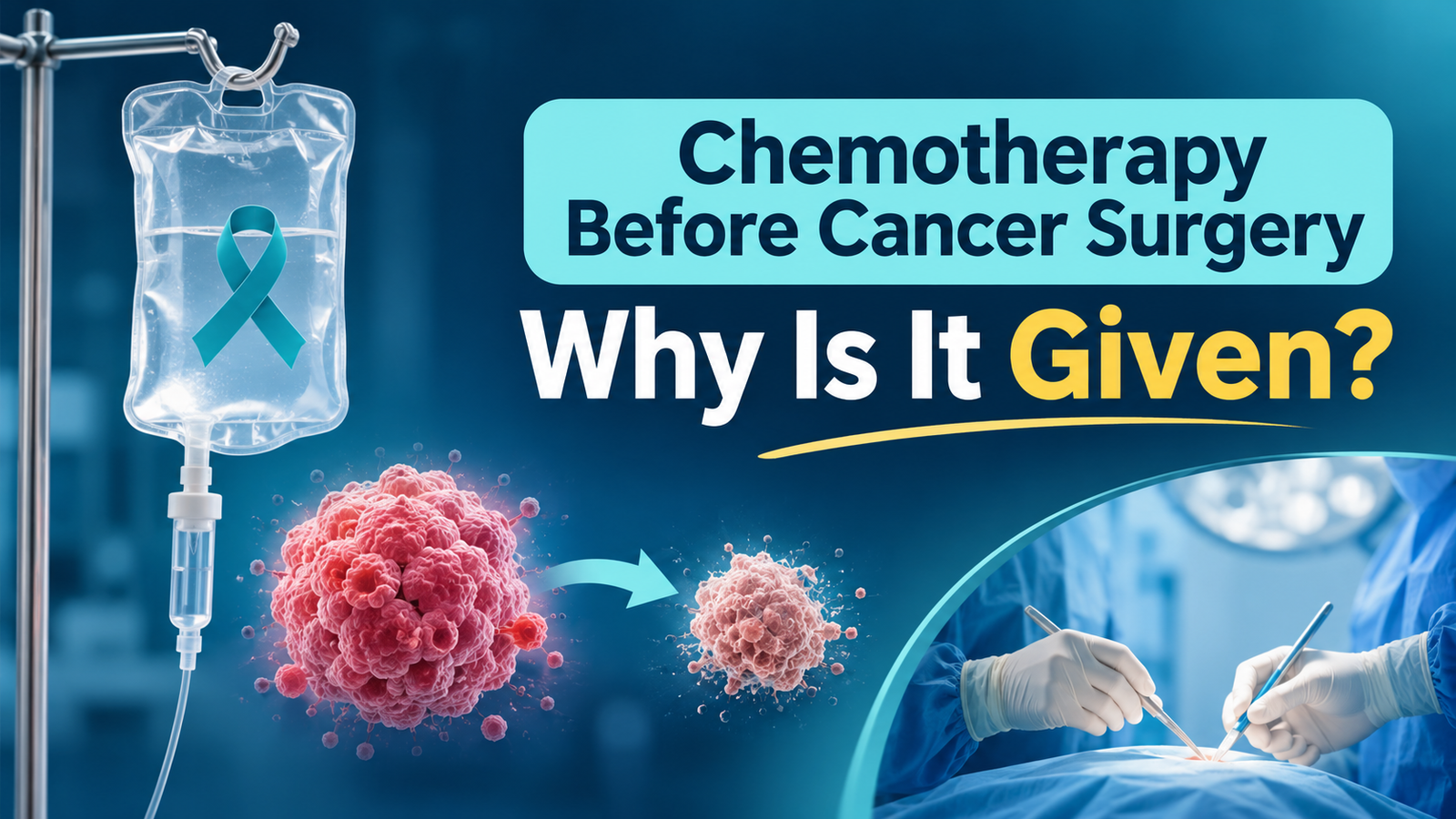


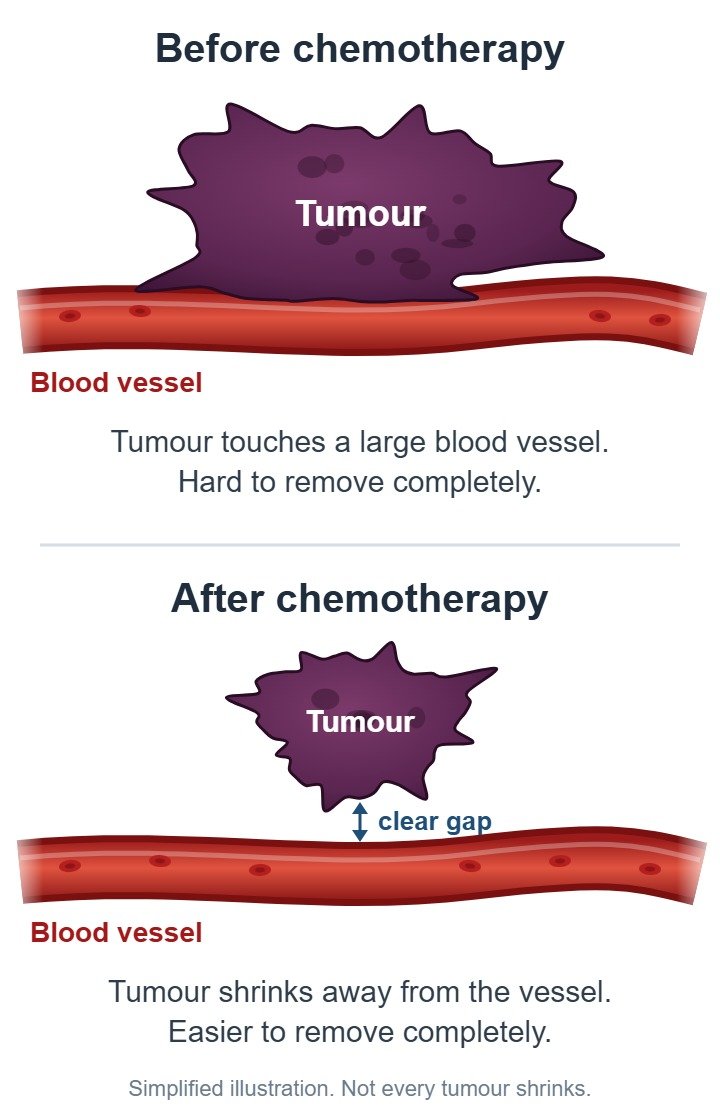
If your doctor has said your cancer can be removed, it can feel strange to start with Chemotherapy instead. Chemotherapy before surgery, called Neoadjuvant Chemotherapy, shrinks the Tumour and kills cancer cells that may have spread but are too small to see on scans. For Stomach, food pipe, rectal and some Pancreatic cancers, this order gives better results than surgery alone.
It does not mean your cancer is too advanced for an operation.
Think of the Tumour as a fire, and stray cancer cells as sparks blown across the room. Surgery puts out the fire. Chemotherapy given first puts out the sparks you cannot see, and often makes the fire smaller.
What is Neoadjuvant Chemotherapy?
It is anti-cancer medicine given before the main treatment, usually surgery.
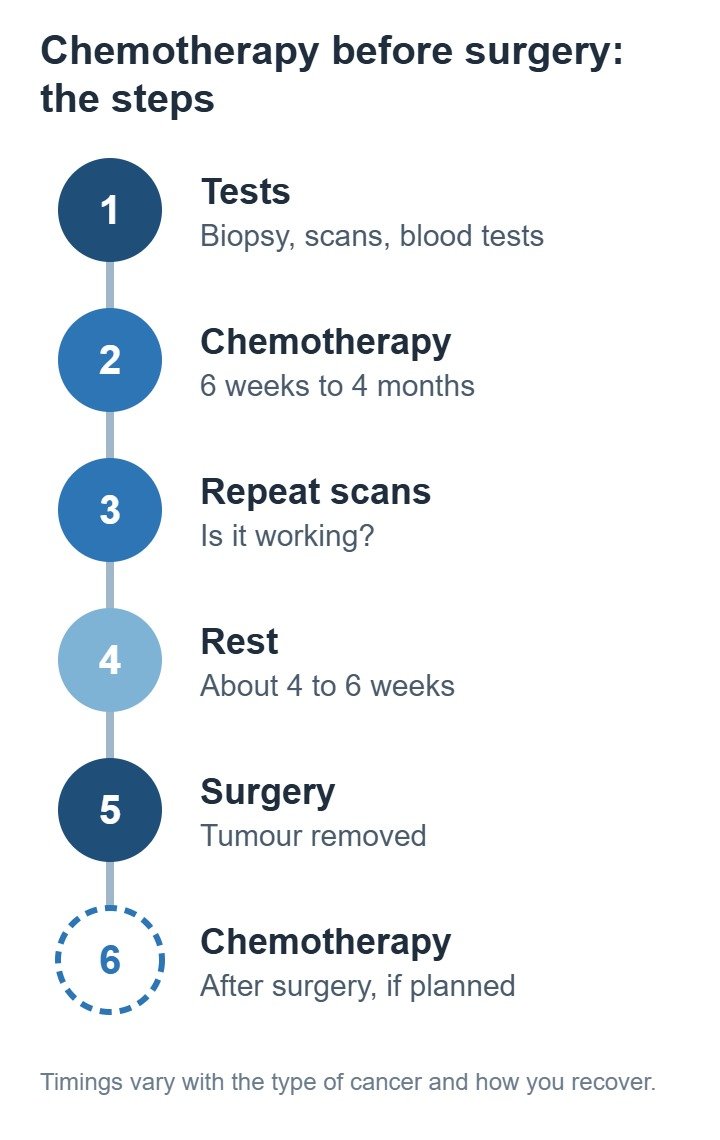
The medicines travel in the blood to cancer cells anywhere in the body. Treatment usually lasts 6 weeks to 4 months.
chemotherapy after surgery is called adjuvant; having both is called perioperative. Some people also have radiotherapy, or Immunotherapy, which helps your immune system attack the cancer.
Why is Chemotherapy given before surgery?
It makes it more likely that surgery removes all the cancer, and that the cancer stays away.
- It shrinks the tumour, which may then peel away from nearby blood vessels and organs.
- It treats hidden cancer cells early. These tiny deposits, called micrometastases, are the main reason cancer returns.
- It uses your strength while you have it. After a big operation, many people are too weak to complete Chemotherapy.
- It shows how the cancer behaves. If the cancer grows despite Chemotherapy, a major operation would probably not have helped, and you are spared it.
Which cancers are treated with Chemotherapy before surgery?
It is standard for some cancers, an option for others, and still being studied for a few.
| Cancer | chemotherapy first? | What is usually given |
|---|---|---|
| stomach cancer that has grown into the wall or reached lymph nodes | Standard | chemotherapy before and after surgery; Immunotherapy now added in some |
| Food pipe (oesophagus) cancer | Standard | chemotherapy, or Chemotherapy with radiotherapy |
| rectal cancer, locally advanced | Standard | chemotherapy and/or radiotherapy |
| pancreatic cancer touching major blood vessels (borderline resectable) | Usually advised | chemotherapy, sometimes with radiotherapy |
| pancreatic cancer that is clearly removable | Still being studied | Surgery first or Chemotherapy first |
| Large Colon cancer | Option in selected patients | About 6 weeks of chemotherapy |
| Bowel cancer spread to the liver | Often used | chemotherapy before and/or after Liver surgery |
| gallbladder and Bile duct cancer | Not yet standard | Promising early results; used in selected patients |
Some bowel and Stomach cancers have a feature called mismatch repair deficiency (dMMR or MSI-high), found by testing the Biopsy. These respond very well to Immunotherapy. In one study of rectal cancers with this feature, the Tumour disappeared in every patient and most avoided surgery. Long-term results are awaited.
What happens before Chemotherapy starts?
Tests confirm the cancer, show its spread and check your fitness.
- biopsy to confirm cancer, with Tumour tests (such as MMR or HER2) that guide the choice of medicines.
- Scans: CT, and sometimes PET-CT, MRI or endoscopic ultrasound (a camera test with an ultrasound probe).
- Staging laparoscopy for Stomach cancer: a keyhole look inside the abdomen for hidden spread.
- Blood tests, including Tumour markers such as CEA or CA 19-9.
- A stent (small tube) if the Tumour has blocked the Bile duct and caused Jaundice.
- A port or PICC line, a thin tube under the skin for drips.
Use this time to get stronger: walk daily, eat enough protein, and stop smoking and alcohol. This improves stamina; whether it lowers complications is not yet proven.
What happens on Chemotherapy days?
Most Chemotherapy is given in day care, and you go home the same day.
After a blood test and anti-sickness medicine, the drip runs for a few hours. Some treatments continue through a small pump you take home for a day or two. Each round, called a cycle, repeats every 2 or 3 weeks.
What are the side effects?
Side effects are common but manageable, and most settle after treatment.
- Tiredness, nausea, loose motions and mouth sores
- Low blood counts, which raise the risk of infection
- Tingling or numbness in fingers and toes, and sensitivity to cold, with oxaliplatin; this can take months to settle
- Hair thinning or loss with some medicines
If side effects are severe, doses are reduced or delayed.
Is it safe to delay surgery for Chemotherapy?
Yes, where it is recommended. The Chemotherapy is treating the cancer, so the time is not lost.
The Tumour rarely grows during Chemotherapy in Stomach and Colon cancer. It is more common in Pancreatic cancer, where it usually means surgery alone would not have helped.
How do doctors check if Chemotherapy is working?
Scans and Tumour markers are repeated during and after treatment.
A Tumour does not always look smaller, even when Chemotherapy is working. In Pancreatic cancer, scar tissue can look like Tumour, so a falling marker with a stable scan can still mean surgery goes ahead.
When is surgery done after Chemotherapy?
Usually 4 to 6 weeks after the last dose, once blood counts and energy recover. After radiotherapy for Rectal cancer, the gap is often longer.
chemotherapy first does not raise complication rates in Stomach and Colon cancer surgery. Before Liver surgery, the number of cycles is limited, because too much can harm the Liver.
What happens after surgery?
The removed tissue is examined under a microscope. Sometimes no cancer cells are left, a very good sign called a complete response. Many people then finish their planned Chemotherapy.
In Rectal cancer, if the Tumour disappears before surgery, some patients can avoid the operation with close checks, called "watch and wait". If it grows back, usually within 2 years, surgery can still be done in most. In Stomach, food pipe and Pancreatic cancer, surgery is still needed even when scans look clear, because scans miss tiny groups of cancer cells.
Can I work, travel and eat normally during Chemotherapy?
Mostly yes, with some changes.
- Work: many people keep working, with lighter hours around each cycle.
- Travel: short trips between cycles are usually fine. Avoid days 7 to 14 after a cycle, when counts are lowest. Ask before flying.
- Food: small, frequent, protein-rich meals (dal, paneer, eggs, curd, chicken, fish), freshly cooked and hot. Avoid street food, cut fruit, outside salads and unboiled milk. With oxaliplatin, avoid cold drinks for a few days after each cycle.
- Supplements: ask before taking herbal or ayurvedic products.
- Family: normal family life is fine. Keep away from people with cough or fever, and use contraception.
When to call your doctor
Call your team the same day, even at night, for:
- Fever of 100.4°F (38°C) or more, or shivering
- Loose motions more than 4 to 6 times a day, or not keeping fluids down
- Bleeding, breathlessness or chest pain
- Yellow eyes or dark urine
- Pain or swelling in an arm or leg
- Redness or discharge around your port or line
Questions to ask your doctor
- Why is Chemotherapy being given first in my case?
- Which medicines will I have, and for how long?
- Has my Biopsy been tested for MMR?
- What happens if the Tumour does not shrink?
- Whom do I call at night if I get a fever?
Frequently Asked Questions
You can discuss it, and for some cancers both orders are reasonable. For Stomach, food pipe and locally advanced Rectal cancer, skipping Chemotherapy first can mean a higher chance of the cancer coming back.
Age alone does not decide. Your overall fitness and other illnesses matter more, and doses can be adjusted.
It can. Some Chemotherapy medicines reduce fertility, sometimes permanently. If you may want children, ask about storing sperm or eggs before treatment starts.
Most non-live vaccines, such as the flu vaccine, are safe and often advised. Live vaccines should be avoided during treatment. Check the timing with your team.
Often yes, if both teams agree on one plan and share reports. Keep copies of all scans, reports and treatment records.
Bottom line
Starting with Chemotherapy is a planned step to give surgery its best chance, not a sign that surgery has been ruled out. Ask your team why it suits your cancer and how they will judge whether it is working.
Sources
- National Cancer Institute: Chemotherapy to Treat Cancer
- American Cancer Society: What Goes into Planning Your Chemotherapy
- Cancer Research UK: When you might have chemotherapy